
Cash App
Block, Inc.Finance
4.7480.89K Reviews
- Version
- 5.74.0
- Installs
- 100.00M
- Age Rating
- Everyone
Screenshots
Our Review of Cash App
 Analysis by Appyee
I decide whether to keep a money app by asking a practical question: does it make the everyday tasks I actually do simpler, without pushing me into features I do not need? Cash App is a finance app from Block, Inc. that brings payments together with banking, Bitcoin and investing tools. Its appeal is that these activities sit in one place; the trade-off is that an all-in-one app may not suit someone who wants a dedicated bank, brokerage or crypto service.
In ordinary use, I would judge it less by how many things it can do and more by whether it fits the way I handle money. If friends already use it to settle shared expenses, that can make it a handy payment option. If what you really need is a traditional account for budgeting, branch service or a particular set of banking features, a specialist alternative may be a better starting point. The right choice depends on which job you want your phone to do.
Getting Started with Cash App
Jumping into Cash App is as easy as pie. Once you download it from the App Store or Google Play, you’ll be greeted with a clean, intuitive interface. Setting up an account is a breeze—just a few taps, and you’re good to go. You can link your bank account or credit card, and boom, you’re ready to start sending and receiving money.
It is free to download, rated for Everyone, and has been available since October 15, 2013. The current version is 5.30.0, with a minimum operating-system requirement of 10. Its audience is substantial: it has more than 100 million installs, around 4 million ratings and roughly 450,000 reviews, with a 4.7 average. Those figures suggest it is familiar to many people, but they are not a substitute for checking whether its current features and availability fit your own needs.
Before moving money, I would take a moment to check which account or card is connected and understand what action each payment screen is asking me to confirm. That small pause matters in any peer-to-peer payment app: sending money to the wrong person can be a more serious problem than an untidy interface. I would also keep account access protected and review transaction details before approving a transfer, especially when responding to an unexpected request.
Features Galore
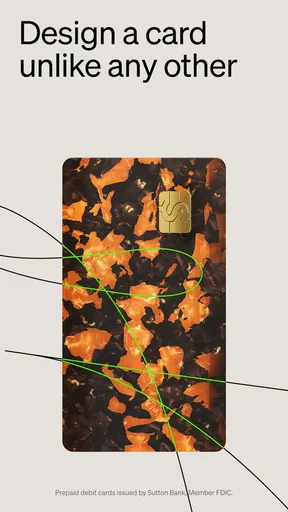
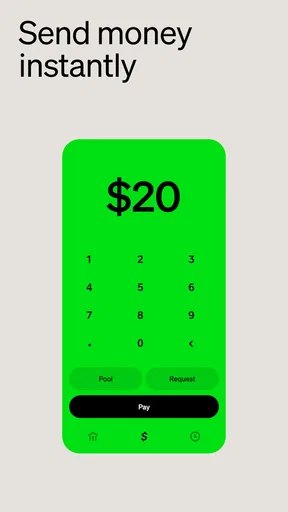
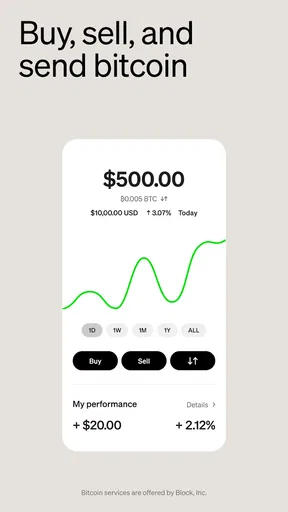
Now, let’s talk features. This app isn’t just about sending money to your friends (although it does that really well). You can also buy and sell Bitcoin, which is a nifty feature for all you crypto fans out there. Need to pay bills? Cash App has got you covered. The Cash Card, a customizable debit card linked to your account, makes spending your balance super convenient.
That mix is most useful when your money habits are already fairly simple. For instance, imagine splitting lunch with a friend, receiving their share through the app, and later using your account balance for a purchase with the Cash Card. Keeping those steps in one app can be more convenient than switching between a payment service and a separate card account. I would still distinguish convenience from financial planning: a payment history is not automatically a complete household budget, so people who need detailed spending categories or a structured budgeting system may prefer a dedicated tool alongside it.
There is also a practical choice to make about how much activity to keep in one place. Combining payments with investing and Bitcoin can reduce app-switching, but it can also make the account feel busier than a simple transfer tool. I would start with the feature I actually need, learn how that workflow behaves, and only then decide whether the other sections belong in my routine. That approach makes it easier to notice fees or prompts tied to a particular transaction rather than treating every action as interchangeable.
When comparing payment options, the most useful question is often not which app has the longest feature list, but where the people you pay are reachable and what kind of transaction you are making. Cash App can make sense when a group already uses it for casual transfers. For people who mostly pay merchants, use a bank’s existing transfer tools, or need a service built around international transfers, another category of app may fit better. I would not move every payment habit to a new service just to try one convenient feature.
One non-obvious habit that helps with any payment app is to treat a request for money differently from a message asking you to send it. I would verify the recipient through a separate channel if the request is unexpected, and I would avoid rushing because a message sounds urgent. A clean interface can make a transaction feel effortless, but the responsibility to check the recipient and amount still sits with the person confirming it.
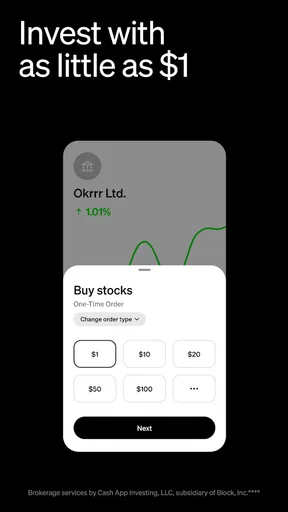
One of the standout features for me is the ability to invest in stocks directly from the app. Whether you’re a seasoned investor or just dipping your toes in the stock market, Cash App’s investment feature is user-friendly and perfect for beginners. Plus, they offer fractional shares, so you can start with as little or as much as you like.
Having stocks and Bitcoin close to everyday payments may lower the barrier to exploring investing, but I would not confuse easy access with a recommendation to trade. Investing carries risk, and a streamlined screen cannot decide whether an asset suits your goals or tolerance for losses. If you want research tools, a broad range of investment choices or a more dedicated portfolio experience, comparing brokerage-focused services is sensible. For someone who only wants to learn with small, considered steps, the in-app option may feel less intimidating, but it is still worth making decisions deliberately rather than tapping through out of curiosity.
Another useful boundary is to keep payment money and long-term investment decisions mentally separate, even if they appear in the same app. I would decide in advance what balance I need for near-term spending and avoid treating money set aside for bills as available to invest. That simple distinction can prevent the convenience of one interface from blurring different financial purposes.
User Experience and Design
The design of the app is sleek and minimalistic, making navigation a walk in the park. Everything feels well-thought-out and responsive, which is a relief in a world full of clunky apps. I especially appreciate the security measures—like Face ID and fingerprint login—keeping your financial data safe and sound.
Even with a straightforward layout, financial apps deserve a little more care than ordinary social apps. I would enable a device-level screen lock, avoid approving payment requests while distracted, and make a habit of checking activity after using the account. Biometric sign-in can make returning to the app easier, but it is only one part of safe use; it does not make a mistaken transfer or a poor investment decision impossible.
There can also be friction when an app serves several kinds of financial activity. A payment, a card purchase, a Bitcoin transaction and an investment decision are not the same task, so I would read the labels and confirmation details instead of assuming that a familiar layout means the same rules apply. This is particularly useful if you are new to investing or digital currency: take time to understand the transaction type before proceeding, and do not make a trade simply because it is easy to reach from the home screen.
Cash App is not automatically the right replacement for a bank account, a dedicated brokerage or a specialist crypto platform. Someone who values a traditional banking relationship, detailed budgeting, or a more focused investing workflow may be happier keeping those needs with providers designed around them. The advantage here is convenience across several money tasks; the cost of that convenience is accepting a more general-purpose experience rather than choosing the deepest tool for each job.
Is Cash App Right for You?
So, should you give Cash App a whirl? If you’re someone who loves managing finances on the go, enjoys a bit of stock trading, or wants to dabble in Bitcoin, then absolutely, yes! It’s a powerhouse of an app that packs a punch without overwhelming you with complexity.
I would especially consider it if you regularly settle everyday costs with people who already use it and want payment, card and investing options close at hand. I would hesitate if you need a specialist service, prefer to keep investing separate from spending, or are uncomfortable managing financial activity through a phone app. A different choice may also be better if your main priority is a bank’s particular account features or a more comprehensive budgeting setup. Choosing not to use every feature is perfectly reasonable; the app’s breadth only helps when it matches your routine.
If you are switching from another payment app, the main cost is not necessarily money; it is rebuilding a habit. You may need to tell regular contacts where to pay you, change which app you check, and get comfortable reviewing a new transaction history. I would not close or abandon an existing method until the people and recurring arrangements that matter to me have a reliable alternative. For occasional transfers, it may be simpler to keep the familiar option rather than move everyone for a small convenience.
Before relying on it for regular spending, I would test the basic workflow with a low-stakes transaction and make sure I understand how the balance, linked payment method and card fit together. That gives you a chance to learn the interface before using it for something time-sensitive. If you are exploring the investment or Bitcoin functions, treat those as separate decisions: understand what you are buying, consider the risk, and do not use money you need for near-term expenses.
Of course, like with any app, there are always things to be mindful of. Always stay cautious with online transactions and keep an eye on any fees that might crop up, especially when dealing with Bitcoin.
That is the main trade-off I would keep in mind: Cash App makes several kinds of money activity convenient to reach, but convenience does not mean every transaction is free of cost or risk. Before confirming a payment, card action or digital-currency transaction, I would review the amount and any charges shown in the flow. For recurring use, that quick check is a better habit than assuming a familiar action will always work the same way.
To wrap it up, Cash App is a versatile tool that’s earned a spot on my home screen. It’s fast, reliable, and incredibly user-friendly. So, if you’re ready to take control of your financial life, give it a shot. You might just find it’s exactly what you’ve been looking for.
My recommendation is to try it for the task you genuinely want to simplify, rather than treating it as an automatic replacement for every financial service you use. If casual payments and a few additional money tools in one place match your habits, it is an appealing option. If you need depth in banking, budgeting or investing, keep comparing focused alternatives. That distinction makes the decision clearer: choose Cash App for the convenience it offers in your day-to-day routine, and choose something else when a specialist tool better serves the job.
Privacy and Permissions
See what permissions an app requests and how it handles your data.
- Identity
- find accounts on the device
- Contacts
- find accounts on the device, read your contacts
- Location
- approximate location (network-based), precise location (GPS and network-based)
- Phone
- read phone status and identity
- Photos/Media/Files
- read the contents of your USB storage, modify or delete the contents of your USB storage
- Storage
- read the contents of your USB storage, modify or delete the contents of your USB storage
- Camera
- take pictures and videos
- Wi-Fi connection information
- view Wi-Fi connections
- Device ID & call information
- read phone status and identity
- Other
- view network connections, pair with Bluetooth devices, access Bluetooth settings, change network connectivity, full network access, control Near Field Communication, run at startup, control vibration, prevent device from sleeping
Verdict
Strengths of Cash App
- User-friendly interface for easy navigation.
- Instant money transfers with no fees.
- Supports Bitcoin trading and investing.
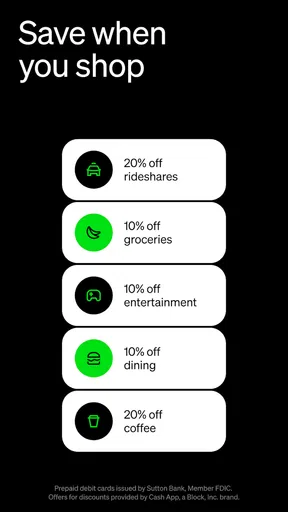
- Cash Boost offers instant discounts.
- Secure transactions with encryption.
Limitations of Cash App
- Limited international transfer options.
- Customer support can be slow.
- Cash Card has limited customization.
- Requires bank account for full features.
- No joint account functionality.
Other Releases by Block, Inc.
View All
Square Point of Sale: Payment
Business4.6

Square Team
Finance4.8

Square Invoices: Invoice Maker
Business4.7
Similar Picks in This Category
View All
Google Wallet
Google LLC4.3

Airtel: Recharge, Bank & Loans
Airtel4.0

PayPal - Pay, Send, Save
PayPal Mobile4.2

DANA Indonesia Digital Wallet
PT Espay Debit Indonesia Koe4.5

Binance: Buy Bitcoin & Crypto
Binance Inc.4.8

MetaTrader 5 — Forex, Stocks
MetaQuotes Software Corp.4.7
You May Also Like
View All


Frequently Asked Questions
What is Cash App and how does it work?
Cash App is a mobile payment service that allows users to transfer money to one another using a mobile app. It works by linking your bank account or credit card to the app, enabling you to send and receive money quickly. Cash App also offers features like investing in stocks and buying Bitcoin.
Is Cash App safe to use for transactions?
Yes, Cash App is generally considered safe, as it uses encryption and fraud detection technology to protect user data. However, users should remain vigilant by enabling additional security features like two-factor authentication and being cautious about sharing personal information to avoid scams.
Are there any fees associated with using Cash App?
Cash App is free to download and use for basic transactions. However, there are fees for certain services, such as a 3% charge when using a credit card to send money and a 1.5% fee for instant transfers to your bank account. Investing and Bitcoin transactions can also incur fees.
Can I use Cash App internationally?
Currently, Cash App is only available for users in the United States and the United Kingdom. Users in these regions can send and receive money between each other, but international transfers outside these countries are not supported at this time.
What should I do if I encounter issues with Cash App?
If you encounter issues with Cash App, the first step is to check the app's help section for troubleshooting tips. You can also contact Cash App support directly through the app or their website. Be cautious of scam customer service numbers and only use official channels for assistance.
